


Originally published on LinkedIn. This work is AI-assisted - read about how I work.
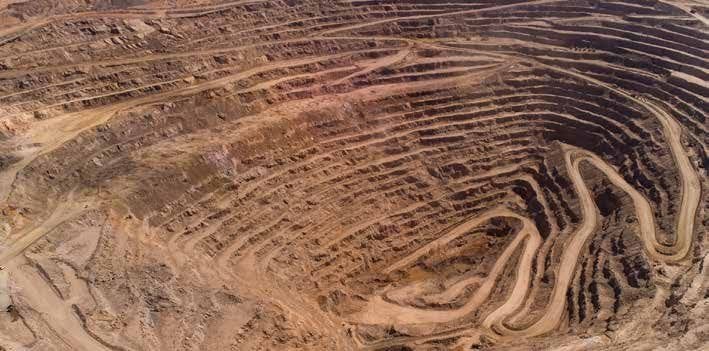
The Hunz Mountains of southern Namibia. Twenty-five kilometres up the valley from Rosh Pinah, which is still running. Anglo American approved US$454 million to build something here in 2000.
A zinc oxide deposit. Near surface. High grade. Unlike anything else here.
Skorpion’s ore was zinc oxide, not zinc sulphide. That distinction determined everything.
Sulphide zinc — at Rosh Pinah, at Black Mountain and Gamsberg on the South African side — needs a smelter. Crush, float, ship, smelt. Value captured elsewhere.
Oxide ore needed a different process. Anglo dissolved it directly in sulphuric acid, then recovered zinc metal by solvent extraction and electrowinning. No smelter. No concentrate shipment. Special High Grade zinc, 99.995 percent pure, produced at the mine — the first time anyone had done this at commercial scale, anywhere.
First metal: May 2003. One of two zinc refineries in Africa. Nameplate capacity 150,000 tonnes per annum.
Vedanta Zinc International acquired Skorpion in 2010, part of a US$1.338 billion package that included Black Mountain and Gamsberg. The oxide ore ran to approximately 2015. A life-extension programme targeted secondary mineralisation in Pit 112. Slope failures ended that. Vedanta placed it on care and maintenance in May 2020. From 1,800 to thirty-five.
Five years on care and maintenance. The refinery has not restarted.
The acid plant is commissioning. About 1,000 tonnes per day of sulphuric acid for Namibia’s uranium and copper operations, replacing imports. Not zinc yet, but alive.
The refinery cannot process Rosh Pinah’s sulphide concentrate. Cannot process Gamsberg’s. All sulphide, requiring a roaster or pressure oxidation circuit ahead of the existing plant. That conversion costs US$160 to US$220 million. It requires power at refinery scale — approximately 100 megawatts — that southern Namibia’s grid cannot yet reliably or affordably supply.
Ten kilometres from this refinery, jointly owned by the two mine operators in this valley, a sulphide deposit called Gergarub holds 10.1 million tonnes of zinc, lead, and silver ore with a defined reserve and a designed underground mine. Discovered in 2008, five years after Skorpion opened — ore that arrived too late for the original investment case and too early for the next one.
Three things need to align: a zinc price that justifies the conversion capital, the capital itself, and a power solution. All three. In the same window.
Some imagine it. The circuit closes. Rosh Pinah concentrate follows Gergarub into a converted refinery. At scale, a destination for Gamsberg and Black Mountain that is not a smelter on another continent.
The refinery is still here, built for ore that ran out. Ten kilometres away, Gergarub is still here, waiting for a refinery converted to take it. Not geology. Price, capital, and power — none has moved. Yet.