


Originally published on LinkedIn. This work is AI-assisted - read about how I work.
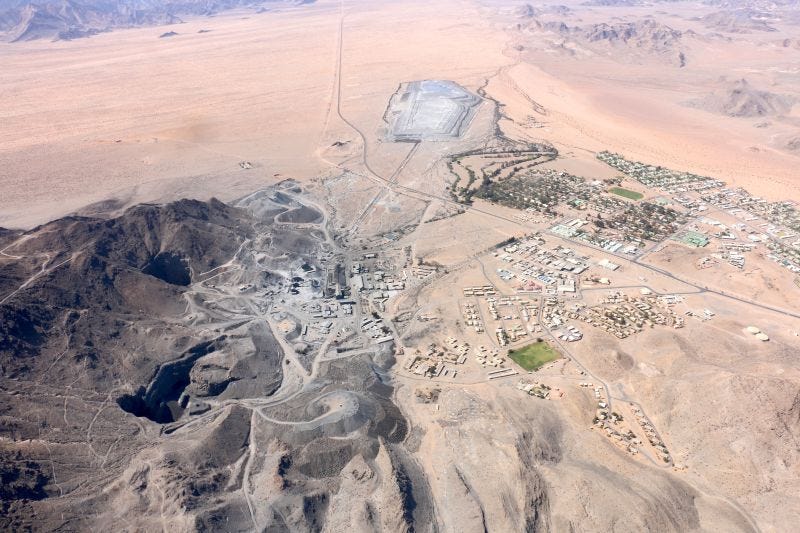
The Hunz Mountains of southern Namibia are far from everything. Rosh Pinah Zinc sits here, twenty-five kilometres down the valley from Skorpion Zinc, which has been on care and maintenance since 2020.
Rosh Pinah is still running.
A German-born prospector arrived here in 1924 and spent forty years searching the Namibian desert. He gave the place its Hebrew name — rosh pinah, cornerstone. He died in 1964, the year after a geologist found the ore.
First production: May 1969. Rosh Pinah is Namibia’s oldest continuously operating underground mine.
The ore sits in the Rosh Pinah Formation — rock approximately 750 million years old. It formed in a rifting basin as two ancient continental cores pulled apart, zinc and lead sulphides settling on the seafloor, folded and faulted into their current shape over geological time. The process is called SEDEX — sedimentary exhalative — which is a precise way of saying the sea did the mineralising and the earth did the rest.
Across the Orange River, 246 kilometres south, Aggeneys and Gamsberg sit in rock almost twice as old, formed by an entirely different geological event. The river marks more than a border.
The ownership chain tells you what zinc does to marginal operators. Iscor ran it from 1969. A zinc price collapse in the early 1990s sent the mine into liquidation. Iscor bought it back. Restarted. Iscor restructured into Kumba Resources; the non-iron ore assets became Exxaro. Exxaro sold to Glencore in 2012. Glencore sold to Trevali in 2017. Trevali went bankrupt in 2022.
Appian Capital Advisory acquired the mine from the Trevali insolvency estate in June 2023. It is the third owner since 2012.
The expansion Trevali had designed and never built is over ninety percent complete. RP2.0 targets a deeper ore body via a new decline. The physical infrastructure is nearly complete. When the plant commissions in the second half of 2026, throughput will nearly double. Funded by a N$2.6 billion bank facility and US$125 million upfront from a silver stream sold to Versamet.
815 people work here. The town of Rosh Pinah, population 7,000, is managed by a private company jointly owned by this mine and Skorpion. When Skorpion went dark, the town lost half its revenue base. Over 2,000 people left. Rosh Pinah kept it from losing everything.
Fifteen kilometres away, between this mine and Skorpion, a zinc-lead-silver sulphide deposit called Gergarub sits undeveloped. Discovered in 2008. Jointly owned by both mine operators. It needs a zinc price, committed capital, and power that this part of Namibia cannot yet reliably supply. Three conditions. None yet met.
The prospector named it cornerstone before a metre of ore had been drilled. The ore is still here. The next chapter is ninety percent built.
Waiting for conditions that have nothing to do with the geology.