


Originally published on LinkedIn. This work is AI-assisted - read about how I work.
The road from Gweru south to Shurugwi passes through plateau country. The grass is pale here. The kopjes push shoulders through the soil like the first hints of the Great Dyke beneath.
Anglo American (Amzim) had been operating in Zimbabwe since the late 1940s. By the 1980s they were a conglomerate: nickel at Bindura; sugar at Hippo Valley and Mkwasine Estates; gold; food manufacturing; ferrochrome. They were more of a mining house than a collection of mines. A mining house in the traditional Southern African sense.
They began their retreat at the AGM in London in May 2000. The chairman announced a divestment program in Zimbabwe.
Bindura Nickel was sold to Mwana Africa in 2003 for US$8 million. Then Freda Rebecca gold mine also to Mwana. Slow disposals of food and industrial assets to indigenous consortia. Mkwasine was expropriated under Section 8 on 90 days’ notice, in breach of bilateral investment protection agreements. Hippo Valley was sold to Tongaat-Hulett in 2006. Zimbabwe Alloys was gone.
By 2008 all that remained was one asset: a platinum mine under construction in the Great Dyke.
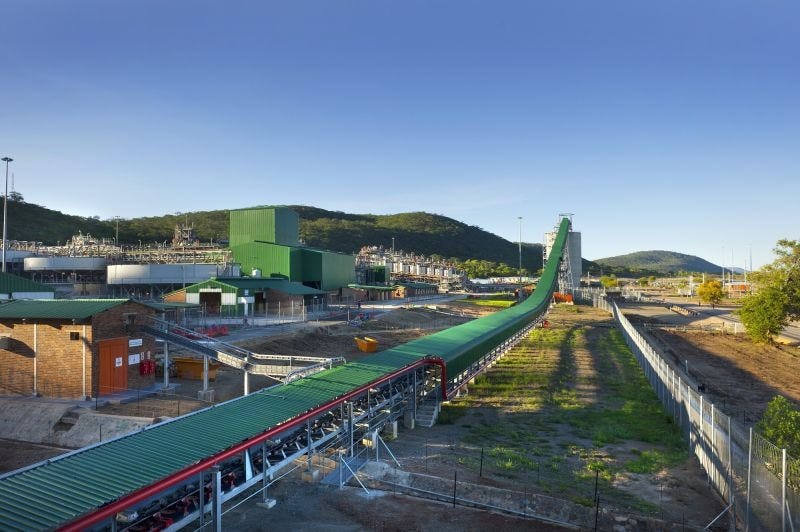
Anglo’s assessment, in June that year at the height of international controversy over another disputed presidential election, was blunt. “If development at Unki is stopped, the project will be lost,” they said. The underground portal on the east side of the Chironde Range had already been driven. Six hundred and fifty personnel were on site. Anglo decided to retain Unki and absorb the political risk.
The concentrator was commissioned in Q4 2010. First refined metal followed in early 2011. US$500 million-plus was invested into mining and social infrastructure. The smelter: $62 million invested to meet Zimbabwe’s requirements for beneficiation. It produced first matte in September 2018.
In 2019, Unki became the first mine in the world to sign up to independent IRMA audits. It was the single biggest employer in Shurugwi District. And the Tongogara Community Share Ownership Trust was seeded with $10 million. Its benefits spread over 22 rural wards belonging to three different chieftainships.
Amzim’s residual interest was folded into Anglo American Platinum. Anglo demerged Amplats, renamed Valterra Platinum, effective 31 May 2025. The connection to Anglo American, present since the late 1940s, was then fully severed.
Today Unki sits under Valterra’s majority. The Tongogara Trust, an employee scheme, strategic partners, and the National Indigenisation Fund hold their stakes alongside it.
It’s a modern, mechanised and IRMA-certified mine. In Zimbabwe. Producing 210,000 to 240,000 PGM ounces a year from one of the richest parts of the Great Dyke.
The operating environment is still complex. Anglo could not leave this mine in 2008. Today, it no longer owns it. The mine life runs to 2060.