


Originally published on LinkedIn. This work is AI-assisted - read about how I work.
Platreef runs underground at Turfspruit, 850 metres down, waiting to be reached. At Mogalakwena, on the same geological belt, it has been producing from surface for decades. Same reef. Different story entirely.
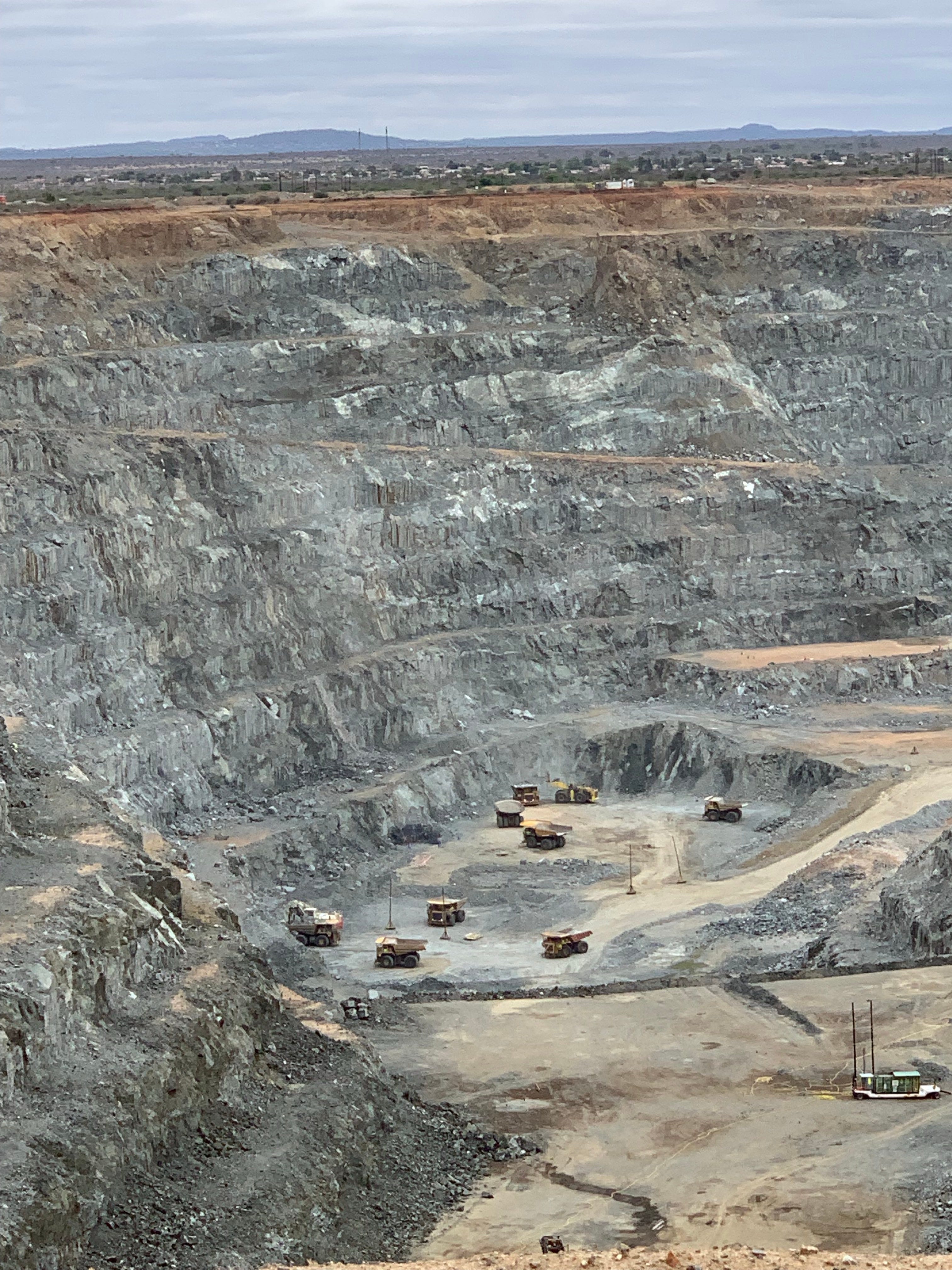
Mogalakwena is not simply the world's largest open-pit PGM mine. It is one of the most remarkable mineral resources on earth. 1 in every 14 ounces of platinum mined anywhere comes from this single open pit in Limpopo. The world was never going to leave this resource in the ground.
The Platreef here runs up to 90 metres wide. You mine it from surface with trucks. The concentrators process nearly 14 million tonnes a year, with a workforce of close to 10,000 — 2,500 employees and 7,400 contractors, per Valterra's March 2025 investor visit presentation. Life of mine runs well beyond 2060. Underground development at Sandsloot, where ore grades 4 to 6 grams per tonne against the open pit's 2.7, entered feasibility in 2025. Global PGM demand exceeded mine supply last year. A mine that defines global PGM supply is preparing to grow into a tighter market.
Since Valterra separated from Anglo American in June 2025, Mogalakwena produces nearly half the company's output at its lowest unit cost. It is the asset on which a standalone PGM business rests. Valterra reported a total contribution to society of R83 billion in 2025. Mogalakwena, generating roughly half the company's EBITDA, drives the largest share of that. Local procurement at the mine — R2.1 billion — exceeds the entire annual revenue of the local municipality. The empowerment scheme transferred R2 billion to regional development trusts in 2020 and paid R460 million in community dividends in 2025. Across Valterra's operations, jobs created and supported have reached 78,529.
These numbers tell one part of the story. Mogalakwena is layered. Open-pit mining here began in 1993 and the underground will take over before the open pit exhausts itself. That is the better part of a century of extraction from a single landscape. The work of translating a resource of this scale into lasting prosperity for the surrounding communities is still in progress. As it should be, across a span that long.
It sits on land the Kekana Ndebele have occupied since long before the Platreef had a name. The river that names the mine runs through territory where, in 1854, the Kekana under Chief Mugombane fought — and lost — a confrontation over land, tribute, and trade routes north. The social and community dimensions of this mine — relocation, land, graves, the law between the MPRDA and the rights of communities who were here first — are a story of their own. I will write my version and surface the writings of others elsewhere. This format cannot do it justice.
The mine will run for another 4 decades. The underground beyond that.