


Originally published on LinkedIn. This expanded version integrates material from my comments on the original post. The argument remains the same; the form is fuller. This work is AI-assisted—read about how I work.
South Africa supplies roughly 70% of the world’s platinum. For the first 45 years of that industry, none of it was refined here.
The ore came out of the ground near Rustenburg. It was smelted into matte and shipped to Brimsdown, near Enfield in north London. There, in a refinery built in 1928, Johnson Matthey separated it into platinum, palladium, rhodium, iridium, ruthenium, and osmium. Powell and Deering had developed the process in 1925. Every step that turned raw matte into tradeable metal happened in England.
This was not an accident of geography. In 1931, JM persuaded Consolidated Goldfields and JCI to merge their PGM interests into Rustenburg Platinum Mines, with JM as both refiner and distributor. The refinery’s location was written into the ownership structure from the start.
Implats came from a different direction. When Union Corporation formed its PGM subsidiary in the mid-1960s, it looked not to London but to Sudbury, Ontario, Canada. Inco, International Nickel Company of Canada, later absorbed by Vale, had spent decades processing PGM matte as a byproduct of its nickel operations. Union Corporation brought Inco in for a 10% stake and its process knowledge. Hambros Bank and the IDC completed the capital structure.
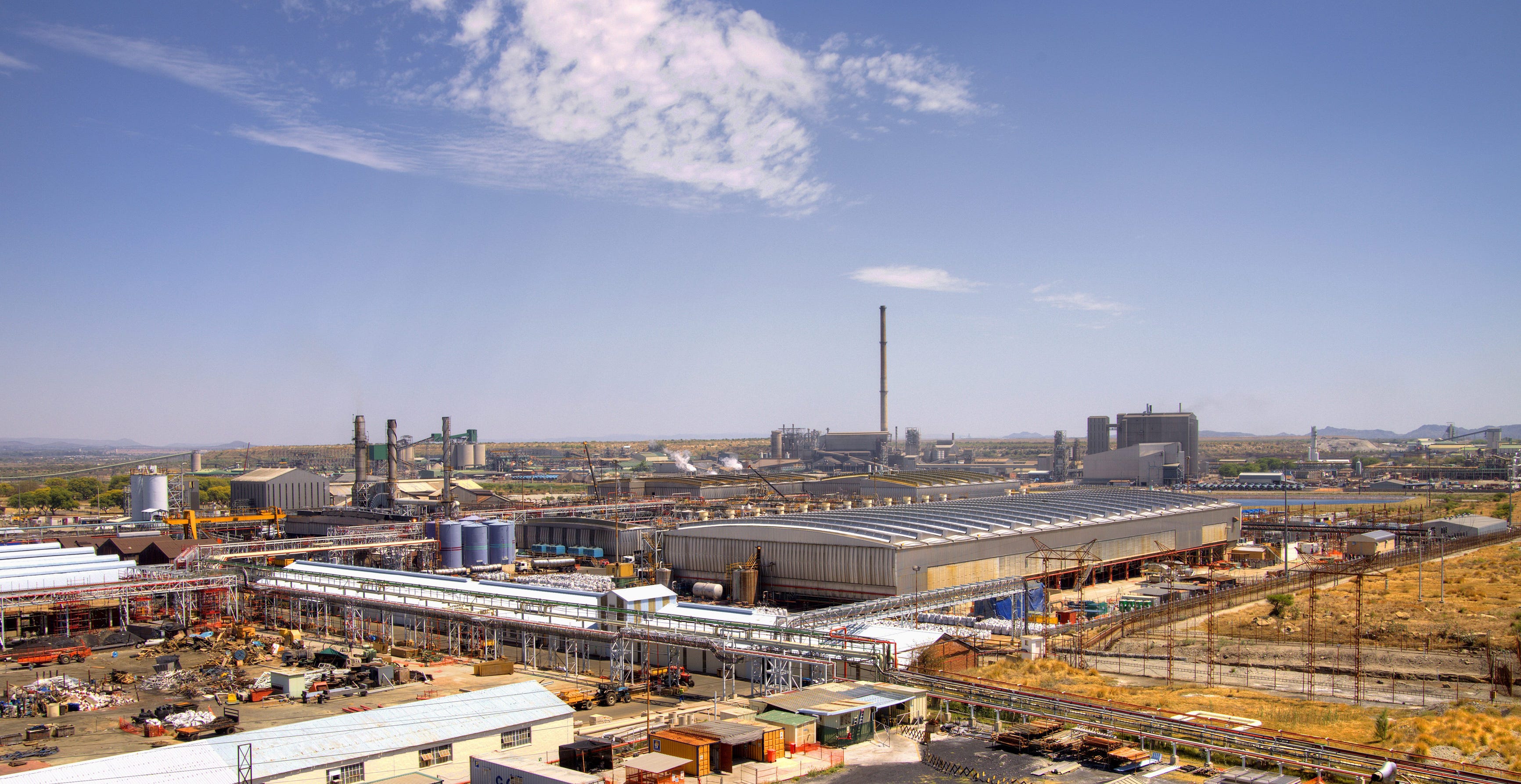
In September 1967, Union Corporation chose Springs over Rustenburg. East Geduld’s infrastructure was available. Johannesburg had the skills. Springs had gas that Rustenburg did not. Nine months later, on 1 July 1969, the first matte entered the autoclaves. Implats had built its own onshore smelting and base metal refinery from day one, outside the JM arrangement.
Johnson Matthey opened Wadeville that same October. 80% JM, 20% Rustenburg Platinum Mines. Rustenburg matte came onshore for the first time. From 1924 to 1969: 45 years in transit.
Base metals moved onshore through the 1980s. Final PGM separation by the early 1990s. Dr L.A. Cramer’s verdict in the 2000 SAIMM Presidential Address: 65 years to transfer total production technology from Europe.
Northam’s Zondereinde smelter, commissioned in 1993, took a different route. Toll refining through Heraeus in Hanau, which had dominated European PGM refining for decades. That partnership pulled Heraeus to Port Elizabeth, where it opened South Africa’s first integrated PGM fabrication refinery in 2007.
Johnson Matthey’s Germiston plant closed in October 2023.
Valterra Platinum, demerged from Anglo American in May 2025, refined 3,916,300 PGM ounces in 2024 from its Waterval and Polokwane smelters. No gram went to England.
What JM and Inco transferred — the knowledge, the process chemistry, the capital — deserves as much recognition as what South Africa took back. That transfer is the achievement. But achievement is not a permanent condition. The floor on which it was built is no longer what it was.
Every refinery and smelter described in this story was commissioned when South Africa had some of the cheapest industrial power in the world. Eskom’s industrial tariff in 2000 was 14 cents per kilowatt hour. In 2026 it is 234 cents — a 1,571% increase in 26 years, running roughly nine times faster than general inflation. This is not background. It is the condition on which the entire onshore processing story depends.
Webber Wentzel, one of South Africa’s major transaction law firms, published a piece in April 2026 on bankable beneficiation in Africa. Their conclusion was precise: energy instability remains the primary reason beneficiation projects underperform. Power can constitute a substantial portion of operating costs, and energy regulation is a core determinant of bankability. That is not an academic observation. It is a transaction adviser telling clients what the numbers look like when the deal is being structured. The investors sitting across the table are putting energy first. The law firm is reflecting that back.
Johnson Matthey cited significant increases in manufacturing and operating costs when it closed Germiston in October 2023. The number behind that statement is a 900% increase in electricity tariffs since 2008. JM did not say so directly. The arithmetic makes the connection.
The chrome industry has made the same point more loudly. When Cabinet approved a 25% export levy on raw chrome ore in late 2025, the Minerals Council and Ferro Alloy Producers Association rejected it in a joint statement. The price of chrome ore is not the cause of smelter closures. Electricity is. By early 2026, only 11 of South Africa’s 66 ferrochrome furnaces were operational. Glencore-Merafe recorded zero ferrochrome output in the fourth quarter of 2025. Chrome and PGM economics are not the same — the metal values are different, the energy intensity is slightly different. But the structural dynamic is identical: industries built on cheap Eskom power, now carrying an energy cost the original investment logic never priced. Northam CEO Paul Dunne, also Minerals Council President, said in March 2026 that whatever Eskom does for ferrochrome needs to be replicated for platinum. He called the ferrochrome situation a burning platform. PGMs are watching the outcome as a precedent.
The question is no longer only historical. Platinum Group Metals, the TSX-listed developer of the Waterberg project on the Northern Limb, ran a formal trade-off study in 2023 on whether to smelt concentrate inside or outside South Africa. Their conclusion: cheaper electricity and water offshore substantially offsets the cost of transporting concentrate to another country. They have since signed an MOU with a Saudi partner and the Saudi Ministry of Investment to explore a PGM smelter in Riyadh. We spent 65 years bringing the value chain home. We are now having a live argument about whether energy costs make it rational to send it back.
This goes beyond PGMs. A major South African manganese producer made a board-level decision more than a decade ago to build its ferroalloy smelting capacity in Malaysia, citing cheap, stable power. The ore is mined here, shipped there, converted to alloy there, sold into Asian markets. The value addition happens in Malaysia. It was a financially rational decision. The energy economics made it rational.
South Africa’s beneficiation debate remains unresolved across most minerals. In PGMs, the value chain came home — across 65 years, through two world wars, the Cold War, apartheid, and the democratic transition. That is a genuine achievement and it belongs in the record alongside the names of the companies and the engineers who made it possible. But the debate about whether it stays home is alive, in boardrooms and law firms and trade-off studies, right now. You cannot mandate beneficiation into existence if the electricity bill makes it irrational.
For the people of South Africa, who are the owners of these mineral resources, that is not an abstract question.