


This story is exclusively available on Substack. This work is AI-assisted - read about how I work.
The Rand did not begin southern Africa’s gold story. Earlier routes converged there.
The Dutch East India Company hunted bullion for their cash-strapped empire at the Cape from 1654. None of it paid.
Then came Tati, in today’s Botswana. Archaeologists recorded about 200 ancient workings in its greenstone belts. When the rush began in the late 1860s, 220 to 250 Europeans arrived, with African labour. By 1872, many were moving towards the diamond fields.
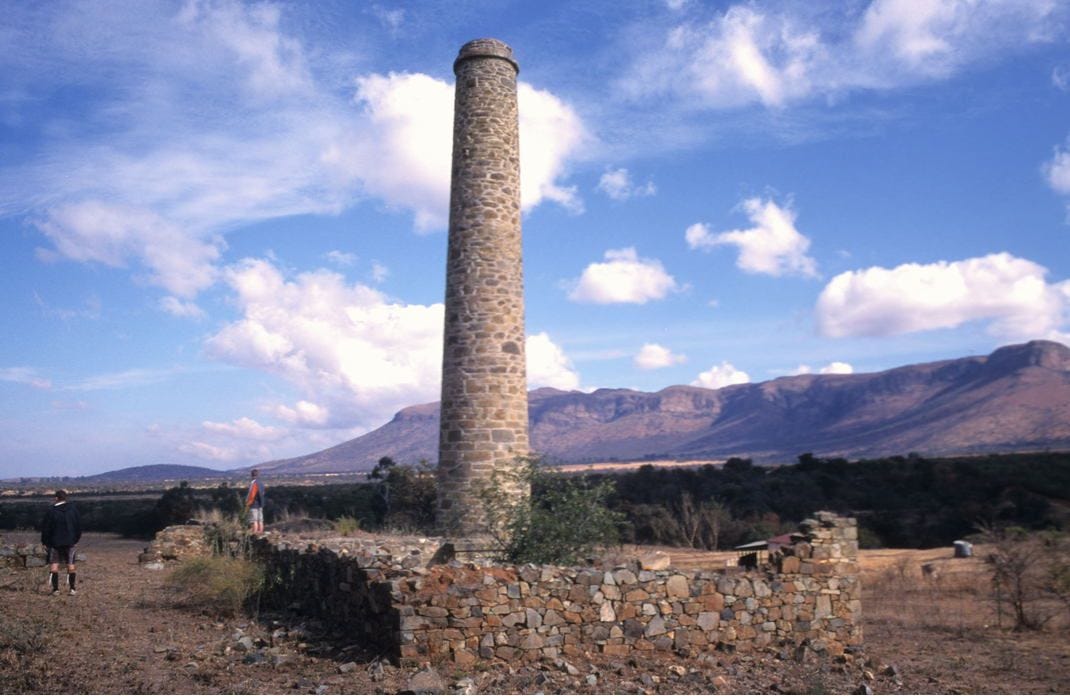
Gold was found at Eersteling, near Polokwane, in 1870. By the end of 1871, about 30 prospectors had staked claims. Imported machinery followed. By January 1875, recovery had reached 10,107 grams. A chimney and a monument remain.
In May 1873, the Lydenburg goldfields opened as public diggings, 60 km from the town. By year’s end, reports put about 1,000 diggers at Mac-Mac and 1,500 around Pilgrim’s Rest, holding some 4,000 claims. Named diggers came from Kimberley and Natal. No one has counted who came from where.
Pilgrim’s Rest outlasted the rush. The town survives.
Wagons used the Delagoa Bay road mainly between May and September. During the rest of the year, the Lowveld was dangerous for people and draught animals. The Transvaal republic and the Pedi under Sekhukhune contested control. Wars followed in 1876 and 1878–79.
Prospecting in De Kaap began in the 1870s. In 1884, a reef gave Barberton its name. The Gold Exchange building opened on 13 April 1887. Prospectors also found older workings in the belt. Nobody has established who made them.
The geologist David Draper followed the diggings from Kimberley to Lydenburg and Barberton, then reached the Rand.
At Tati and De Kaap, the workings themselves showed that the arriving prospectors were not first. I hold in mind the Bakalanga and Basarwa of Tati, the Pedi under Sekhukhune, the Swazi rulers who often understood their concessions as limited grants, and whoever worked that older ground.
There was a brief return to the Cape. Millwood near Knysna became public diggings in January 1887, but its gold was scattered and the rush soon collapsed. On Lion’s Head, a proposed company’s share offer failed. Neither amounted to much.
And then Langlaagte.
On 16 November 1886, George Harrison sold Claim 19 for £10. The buyer resold it three months later for £50. The reliable record then goes silent.
George Harrison Park preserves part of the Main Reef outcrop and its early workings.
We began these gold stories at Langlaagte on 2 June, with Story 36. We end them here too.