


Originally published on LinkedIn on 29 October 2026. This work is AI-assisted - read about how I work.
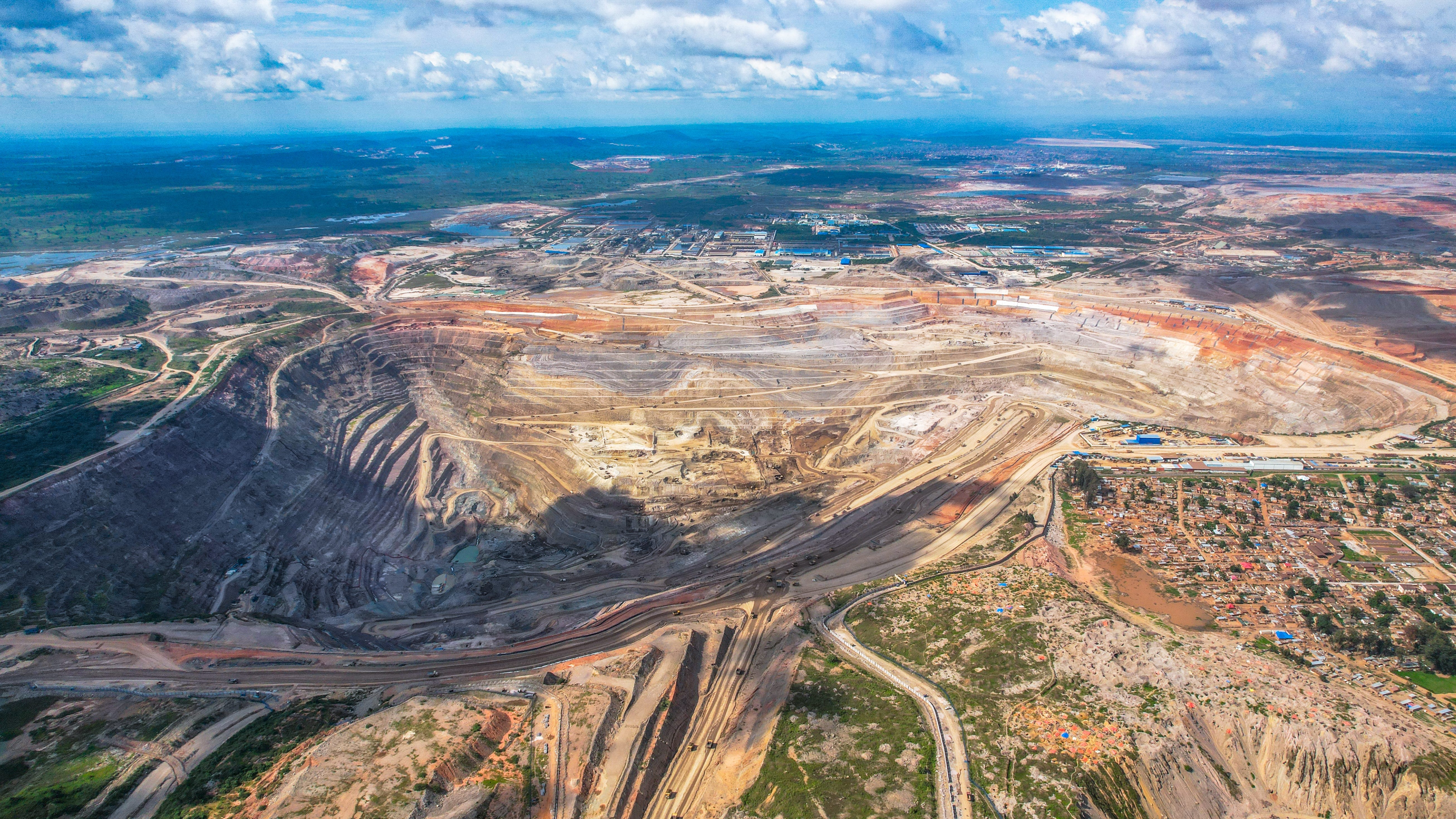
Sicomines Copper Mine, DRC: Can Mining Help Build a Country? (Mining Is Human, Story 92)
In 2008, the DRC tried something remarkable.
It had copper and cobalt. It also had a vast post-war infrastructure backlog and limited access to conventional finance. The Sicomines agreement tried to turn one into the other.
This was not simply a mining project with infrastructure benefits attached. Gecamines S.A. contributed access to mineral resources near Kolwezi. China Railway Group Limited and SINOHYDRO GROUP LIMITED were the original Chinese partners; Zhejiang Huayou Cobalt Co.,Ltd joined later in 2008.
The ambition ran to 6,538 km of roads, hospitals, health centres and two universities. Under the 2009 repayment design, mine profits would first repay urgent infrastructure loans. In the next phase, 85% would successively service mining and remaining infrastructure loans, while 15% could go to shareholders.
Operationally, the mine worked.
Sicomines produced its first copper in 2015 and expanded. When power constrained the operation, the 240 MW Busanga hydroelectric plant was built.
That raises the more interesting question.
Does the capability that can build a great mine, and the infrastructure needed to make it work, translate into an ability to address a developing economy’s wider infrastructure backlog?
Sicomines has been testing that proposition for nearly two decades.
Infrastructure was built. A 2021 evaluation counted 43 infrastructure projects, but found only 15 conformed to the original project list. Congolese institutions have since reported different totals for infrastructure expenditure, and the accounting remains disputed.
The human record is also contested. Communities near the mine have reported damaged fields and polluted water; Sicomines has denied responsibility, and a reported 2022 DPEM inquiry attributed the discharge to another concession.
In 2024, the bargain was recalibrated. The ownership remained 68:32, but a copper-price-linked total infrastructure envelope of US$7bn through 2040 included earlier investment, interest and accepted costs. Gécamines also gained a revenue royalty and the right to market part of Sicomines’ production.
There is a pattern within the pattern.
The DRC’s 2002 Mining Code was designed to attract mining investment. In 2018, it was revised to make more of mining’s value flow to the State, Congolese participants, provinces and communities.
Sicomines had been testing a contractual version of that broader idea since 2008.
In March 2026, the Congolese agency overseeing the agreement commissioned a comprehensive technical and financial audit covering the arrangement from 2008 to 2024.
The mine is real. So is some of the infrastructure.
The larger experiment is whether the capability to build what a mine needs can also help build what a country needs.
Eighteen years later, that account is still being drawn up.
Kevin, my day job is to be an advisor on issues related to mining sector governance and development.
On the development side, this involves advising governments to create fair, stable and predictable conditions that make it easier for mining companies to attract finance for their project.
On the governance side, I deal with the various issues that you have mentioned here: environmental, social, financial. It's clear that a major mining operation is able to contribute a lot of good development outcomes - they have engineering skills to build stuff, they can procure stuff locally and employ people, and they should pay royalties (and hopefully some taxes) to government.
But, and it's a big but - the key to how much benefit actually accrues to the country and the local communities, hangs on the keychain of government. Not only to have appropriate legislation (this is often good enough) but definitely in the implementation of laws and regulations. Sadly, many developing countries struggle with this aspect.