


Originally published on LinkedIn on 27 October 2026. This work is AI-assisted - read about how I work.
Rand Refinery, South Africa: The refinery South Africa’s mines built for themselves (Mining is Human, Story 91)
For 35 years after the Witwatersrand goldfields were proclaimed, South Africa mined the gold but London finished it.
The mines smelted their output on site. What left the reduction works was bullion, still alloyed with silver and base metals. Final refining centred on London.
In 1909, the Transvaal Chamber of Mines took a first step towards changing that. It established the Witwatersrand Co-operative Smelting Works to treat gold- and silver-bearing by-products. But the industry still lacked a central refinery for its gold.
In London, the Royal Mint Refinery was operated by N M Rothschild & Sons. Refiners there could advance an estimated value against bullion, settling the balance after refining and transport charges. From September 1919, Rothschild sold the pooled gold output of approximately 54 South African producers.
The London refiners resisted the prospect of losing this business. The mines nevertheless decided to bring final refining home. The change was about more than geography. Refining at Germiston meant the mines no longer had to send their bullion overseas for its final treatment, with the associated transport, refining charges and settlement arrangements.
On 27 November 1920, the Chamber and its members registered Rand Refinery Limited. Initially, only Chamber-member gold companies could hold shares. Germiston offered rail connections and a position near the centre of the goldfields.
Building the refinery required technical knowledge as well as capital. The Chamber consulted Sir T. K. Rose on refining methods. R. G. C. Pearson, who had managed refineries in Ottawa and London, advised on the new plant. It adopted the Miller chlorine process, suited to treating large volumes of bullion.
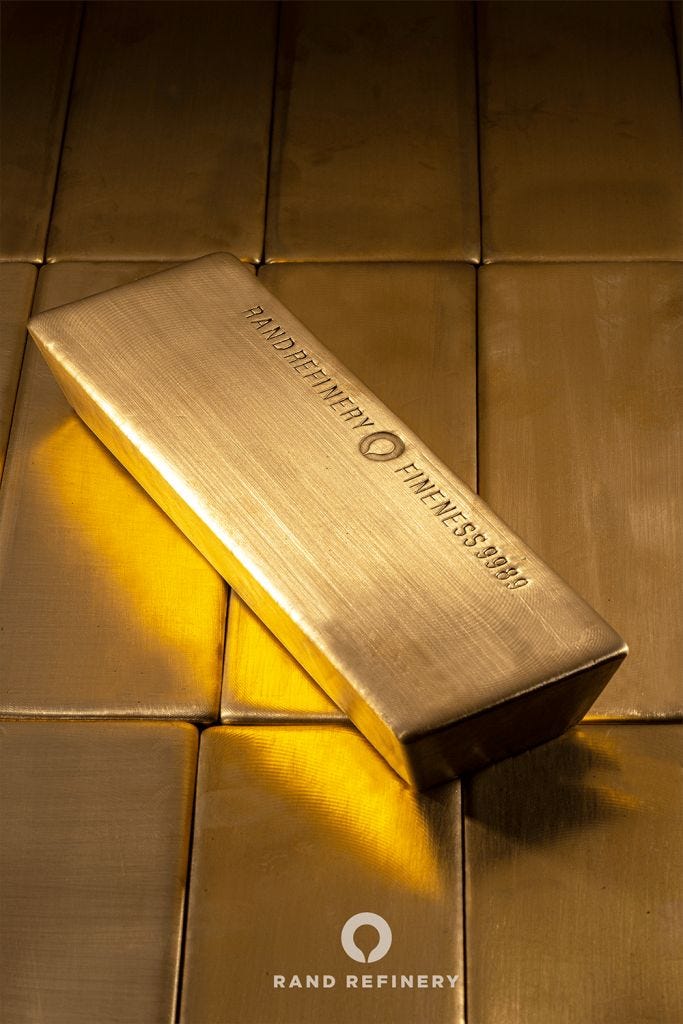
Rand Refinery began operating in 1921, with an annual design capacity of 12 million troy ounces, about 373 t of fine gold.
In 1926, the South African Reserve Bank replaced Rothschild as the producers’ gold-selling agent. Another part of the chain had moved home.
Rand Refinery remains at Germiston, an independent private company owned by South African gold-mining companies. Its 2025 sustainability report records more than 57,000 t of gold refined since 1921, which the company describes as nearly a quarter of all gold ever mined. By April 2025, it had also published more than 1,700 provenance records through the Gold Bar Integrity system.
The mines built Rand Refinery to finish their gold at home. More than a century later, the Germiston refinery remains a testament to the scale of what they established.