


Originally published on LinkedIn on 15 October 2026. This work is AI-assisted - read about how I work.
Gecamines S.A. opened Kamoto’s underground mine in 1969. Annual ore output passed 2.5 Mt by 1974 and reached 3.29 Mt in 1989. Then a cave-in in September 1990 brought production to a halt. By closure that October, the mine had produced a reported 59.3 Mt of ore averaging 4.21% copper and 0.37% cobalt. It would remain closed for seventeen years.
The return began with a 2004 joint venture. Gécamines contributed mining rights and existing assets; Kinross-Forrest undertook the rehabilitation financing. They formed Kamoto Copper Company S.A. in 2005, bringing together the underground mine, concentrator and Luilu metallurgical plant. Production resumed in 2007.
Reopening was only the first challenge. Kamoto’s sulphide, oxide and mixed ores require different treatment routes. Whole-ore leaching was designed to improve recoveries and lower costs compared with the inherited flotation-and-roasting route. In September 2015, KCC deliberately stopped copper and cobalt production again to change how suitable ore was processed. Whole-ore leaching bypassed substantial parts of the older route. The first new copper cathode emerged at Luilu on 11 December 2017. An integrated acid plant followed in 2020, supplying roughly 2,000 t of sulphuric acid a day for copper leaching, as well as liquid sulphur dioxide for cobalt recovery.
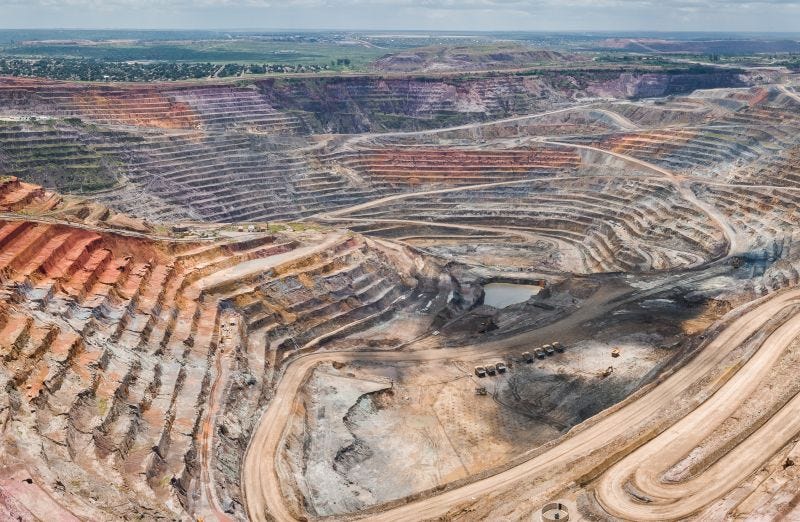
Ownership changed. Katanga Mining succeeded to Kinross-Forrest’s interest and combined with Nikanor in 2008. Glencore built control from there and took Katanga private in 2020. Historically, KCC was held 75% through Katanga, 20% by Gécamines and 5% through Gécamines’ vehicle SIMCO. The later system linked Kamoto underground, KOV and T17 to the concentrator and Luilu.
On 27 June 2019, galleries used by artisanal miners collapsed in the KOV area inside the KCC concession. Forty-three artisanal miners were reported killed. KCC maintained that the collapsed galleries were unauthorized and not linked to its operations.
A 2023 report recorded 6,144 employees and 5,416 contractors at KCC.
In 2025, KCC produced 188,700 t of copper and 22,900 t of cobalt. In February 2026, Glencore and Gécamines signed an agreement intended to provide KCC with additional land for tailings and waste rock and to support further recovery at KOV and T17. Lease registration was outstanding at announcement. Glencore says the additional space could support annual copper production of up to 300,000 t into the 2040s.
Kamoto’s next phase may depend less on finding copper below ground than on making room above it for the waste rock and tailings that recovery creates.