


Originally published on LinkedIn on 6 October 2026. This work is AI-assisted - read about how I work.
Gold drew people to Lupa long before Shanta Gold Limited. Alluvial gold was found there in 1922. African diggers, including migrants from what are now Malawi, Kenya, Zambia and Zimbabwe, worked the Lupa Goldfield’s alluvial deposits. By the mid-1930s, the field’s population had passed 20,000.
Reef mining followed. East African Goldfields began at Saza in 1935. New Saza Mines then produced 270,770 oz from 1.1 Mt of ore between 1939 and 1956. Small-scale mining continued after it closed, but decades passed before the field produced at modern scale again.
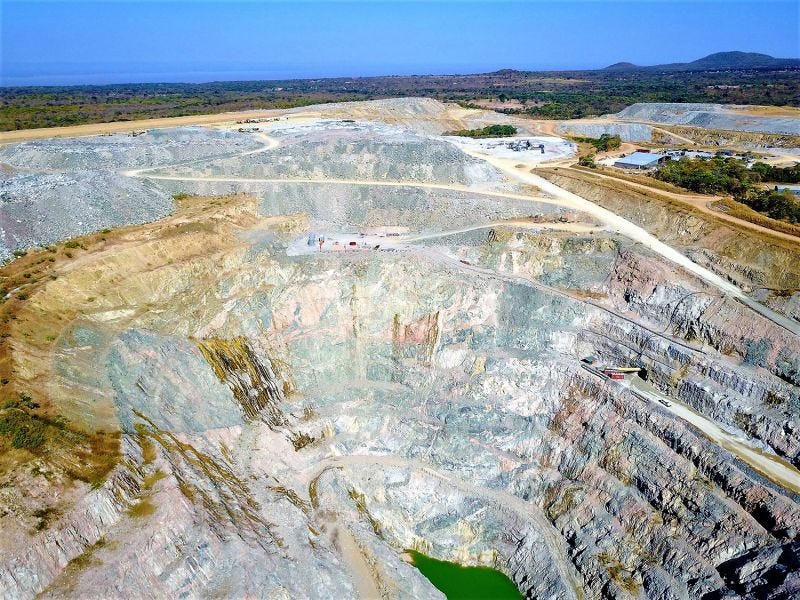
New Luika brought large-scale production back. It produced first gold on 20 August 2012. By 31 March 2013 about US$125m had been spent building it; Shanta dates commercial production from 1 April 2013.
Singida came next. Shanta’s 2020 plan was US$26.4m of construction capital and US$10.4m of pre-production stripping, initially funded from operating cash flow. In July 2022 Stanbic Bank Tanzania added a US$20m facility. Singida poured first gold on 30 March 2023 and reached commercial production on 1 June.
At New Luika, Shanta reported in 2019 that about 40% of the workforce came from surrounding communities. By 2024, acquisition documents described about 1,040 employees and contractors at the mine, approximately 99% of them Tanzanian.
Singida’s land process took longer to settle. In April 2016, HakiMadini and villagers from Mlumbi were still pursuing complaints about compensation connected with Shanta’s land access. By January 2025, Tanzania’s Ministry of Minerals told Parliament that 284 people had been compensated for 1,655 acres. Twenty-six relocated families received new homes, water and road infrastructure, and five acres of land each. A 2025 academic study nevertheless records continuing concerns among some residents about services and the adequacy and explanation of compensation.
Shanta itself is no longer public. In May 2024 Saturn Resources, a subsidiary of ETC Holdings, acquired Shanta and its AIM admission was cancelled.
The latest mine-level production figures located in Shanta’s public reporting before it went private were for Q1 2024: 13,022 oz at New Luika and 8,654 oz at Singida.
Both mines have since expanded or are expanding. Singida’s capacity increased to 730,000 t/year in the first half of 2025. Shanta’s current operator pages say a New Luika expansion approved in late 2025 will lift primary-crusher capacity to 5,000 t/day, add a fourth mill and raise overall throughput by about 40% by the end of 2027.
New Luika returned modern-scale gold production to an old field. Singida made Shanta a two-mine Tanzanian producer. Under private ownership, one has completed a plant expansion and the other has approved another.