


Originally published on LinkedIn on 22 September 2026. This work is AI-assisted - read about how I work.
In 1966, Tanganyika Concessions closed Geita. A Tanzanian government transparency review later attributed the failure to political uncertainty, thin high-grade ore, a fixed low gold price and inadequate financing.
The ground then went quiet for 34 years.
It had already supported a substantial mining town. By the 1950s Geita had around 2,000 workers, housing, a clinic, a private wireless station and even a subsidised weekly air service.
Geita lies in the Lake Victoria goldfields, in Sukumaland. Gold was reportedly discovered there by a German prospector in 1898, although the available record says little about the specific community or chief who held the ground before mining began. Colonial policy excluded artisanal gold production from legal recognition in 1938. Small-scale miners regained legal recognition only under Tanzania's 1979 Mining Act.
In December 2000, AngloGold acquired a 50% interest from Ashanti Goldfields. When the two companies merged four years later, Geita became fully AngloGold Ashanti's.
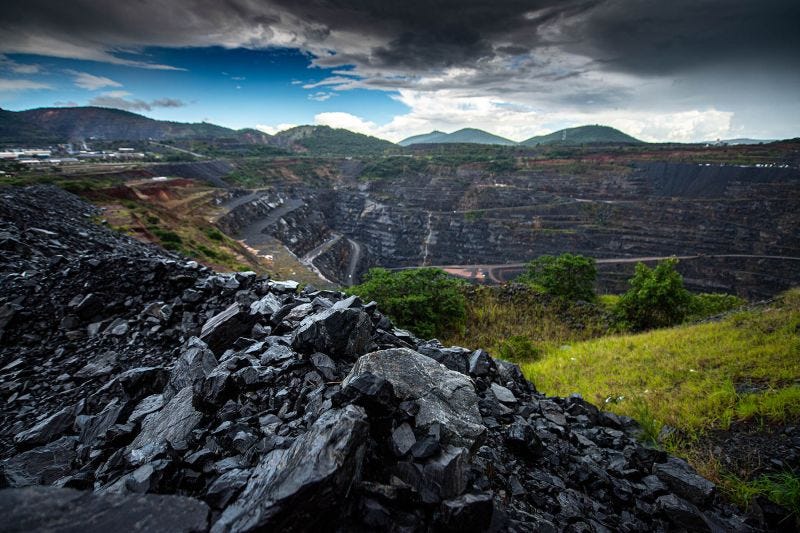
What followed was more than a restart. From 2016 to 2021, AngloGold Ashanti reshaped the mine again, developing three underground fronts at Star and Comet, Nyankanga and Geita Hill, while opening a new pit at Nyamulilima.
The reserve story is the reversal. Geita had about 1.97Moz of reserves when underground production began in 2016. By 31 December 2025 that had risen to 4.02Moz, from 3.25Moz a year earlier. AngloGold Ashanti's Q3 2025 results set a target of a further 60% reserve increase and a mine life beyond ten years, with current output near 500,000oz a year.
The mine has grown in human scale as well. In 2023, Geita counted close to 6,900 employees and contractors. That year it paid US$215m to the Tanzanian government and spent US$4.62m on community programmes.
In June 2025, AngloGold Ashanti agreed to sell 20% of Geita's gold production to the Bank of Tanzania, which the company described as the first such agreement with a large-scale miner.
Artisanal mining never disappeared from the district. Women miners still work the ground around Geita today, alongside one of Tanzania's largest industrial gold operations.
Geita's reversal is not simply that a mine closed in 1966 reopened. It is that, after reopening and moving underground, its reserve base more than doubled.