


Originally published on LinkedIn on 21 September 2026. This work is AI-assisted - read about how I work.
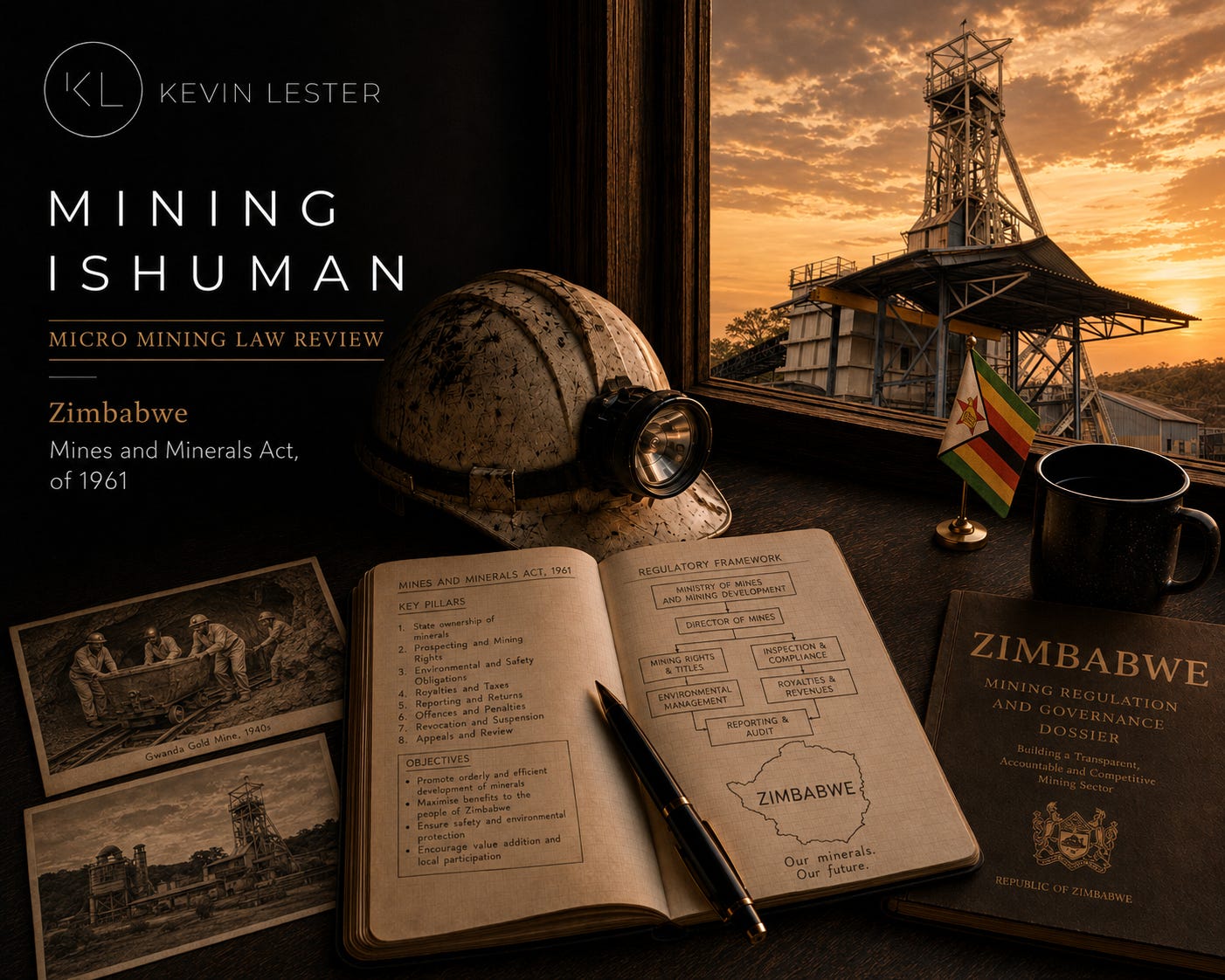
Zimbabwe’s principal mining statute commenced on 1 November 1961. Zimbabwe became independent in 1980. The Act came first and has never been replaced.
That is the pattern: survival, not substitution. The core settlement has endured while successive governments have built new controls around it. The Mines and Minerals Act [Chapter 21:05] was amended five times between 2001 and 2014, but its central vesting doctrine remains. I spend my working life around mining law, but Zimbabwe’s statute book is not my jurisdiction. Here is what I noticed from the public record.
Section 2 vests the right to search, mine and dispose of minerals in the President, not the surface owner. Farmers, occupiers and holders of communal land may hold the surface. The minerals beneath belong to the President.
Access is controlled too. Section 15 requires a non-permanent resident to obtain the Secretary’s prior written consent before applying to register as an approved prospector. Section 20 limits prospecting licences to permanent residents or their appointed agents. In 2025, Statutory Instrument 215 reserved artisanal mining to Zimbabwean nationals.
The difficulty is that Zimbabwe is now trying to modernise the machinery without yet replacing the settlement beneath it. The Mines and Minerals Bill, 2025 would repeal Chapter 21:05, create a central definitive Mining Cadastre Register and shift local administration from mining commissioners to Provincial Mining Directors.
But the replacement has stalled. The Parliamentary Legal Committee’s adverse report raised 21 numbered constitutional concerns and had not been withdrawn as at 30 August 2026. Meanwhile, the surrounding regime continues to change. A 22 May 2026 declaration classified lithium and rare earths as critical minerals and gold as a strategic mineral, with mandatory minimum State shareholding through designated SPVs.
So the old Act remains while policy and legislation reach further around it. That is the friction: the State is changing the mining settlement at its edges while the principal statute survives at its centre.
Nearly sixty-five years settles whether the Act is old. The 2025 Bill settles whether reform is intended. The durability question is whether Zimbabwe can turn that intention into an enacted, commenced and operationally trusted system, and whether the replacement, when it comes, can hold longer than the law it replaces.