


Originally published on LinkedIn on 15 September 2026. This work is AI-assisted - read about how I work.
The Gwanda Greenstone Belt once carried 268 operating gold mines. Most are silent now. Blanket is not.
Gold had been worked across this part of Zimbabwe long before colonial capital arrived. The old miners had already taken the eyes of the reef: the exposed pockets of ore that anyone with a pick and time would find first.
Matabele Reefs and Estate Company acquired Blanket in 1904. Documented mining and metallurgical operations began in 1906.
Falconbridge arrived from Canada in 1964 and operated the mine for nearly thirty years, producing more than 500,000 ounces. Kinross Gold Corporation followed in 1993 and added a 3,800-tpd carbon-in-leach plant.
Then Zimbabwe's gold industry began to shrink.
In 2006, as the country's economic crisis deepened, Kinross sold Blanket to Caledonia Mining (CMCL) for US$1m and 20m shares. By then, much of the old Gwanda goldfield had already fallen quiet.
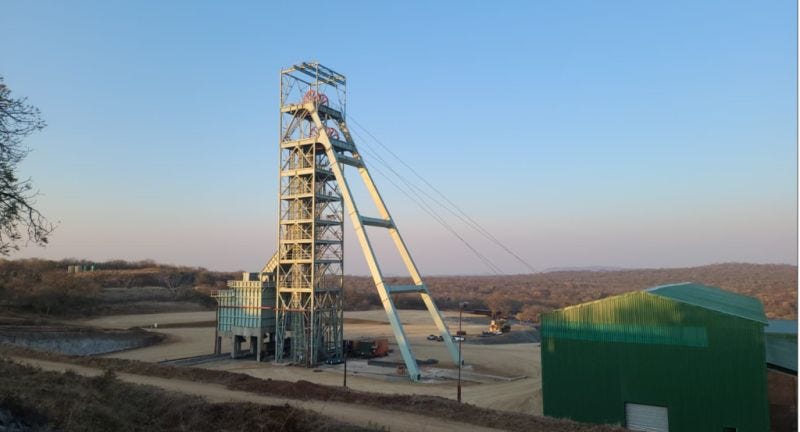
Caledonia could have treated Blanket as a declining asset. Instead, it went deeper. Between 2015 and 2021, Blanket sank its Central Shaft to 1,204 m. The US$67m project was funded entirely from the mine's own operating cash flow and built by a Zimbabwean construction workforce. Caledonia reported 1,850 fatality-free shaft-sinking shifts.
In November 2022, President Mnangagwa came to Gwanda to commission it.
Blanket is now a major employer in the district. Its mine village supports nearly 5,000 residents.
In 2012, Caledonia said it became the first mining company to comply with Zimbabwe's Indigenisation and Economic Empowerment Act, donating 10% of Blanket to the Gwanda Community Share Ownership Trust and selling another 10% to an employee trust.
In 2024, the community trust received a US$1.4m dividend.
Blanket produced 76,213 ounces in FY2025. In Q1 2026, falls of ground restricted access to higher-grade areas and production fell 20.9% year-on-year to 14,767 ounces. Caledonia's group revenue still rose 18.3%.
The gold price carried what the volume could not. Blanket's reserve-based mine plan runs to 2034. But Blanket may no longer be the whole story. Caledonia's Bilboes project in Matabeleland North could become the next chapter. A feasibility study followed in November 2025. Two months later, a US$150m convertible note attracted more than US$600m in investor demand.
Once, the Gwanda belt carried 268 operating gold mines. Most disappeared. Blanket went deeper.
And perhaps that is the more interesting story: not whether Zimbabwe's old gold industry survived unchanged, but whether beneath the silence, a new version of it is beginning to take shape.