


Originally published on LinkedIn. This work is AI-assisted - read about how I work.
South African gold spent a century going down.
At Mponeng, the deepest mine on earth, miners work nearly 4km beneath the West Wits line. For generations, that was the story of South African gold: deeper, hotter, harder, because the richest ore was down there.
Then the new mines stopped coming.
Modder East opened in 2009. Burnstone followed in 2010. Then silence. It became easy to believe South Africa's great gold story was reaching its end.
And then came Qala Shallows.
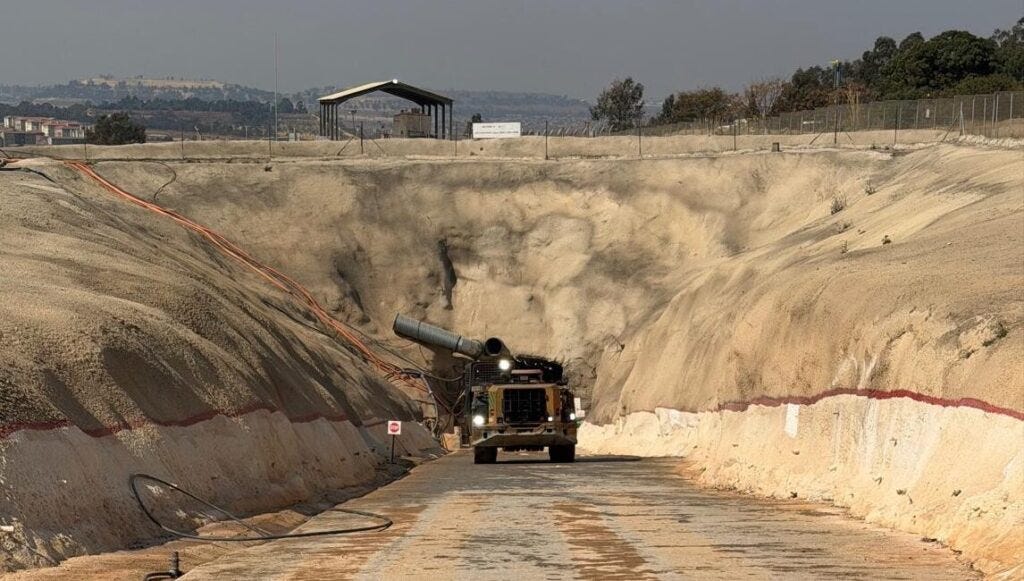
South Africa's newest gold mine reaches only about 800m below surface. It sits on the Central Rand, working reef that a century of deep mining largely stepped over. The gold was always there. There was simply richer ground somewhere below it.
And this is what makes Qala so exciting: it is opening a new mine on the goldfield where the whole extraordinary story began.
The 1886 gold rush started here, on the ridge that built Johannesburg. Miners chased the richest reef down and away, while shallower ground was left behind. Durban Roodepoort Deep — from which DRDGOLD Limited later evolved — worked the broader Central Rand leases until 2000, before closing as the economics turned against them.
But the gold did not disappear. Through the closed years, artisanal miners continued working the reef the formal industry had left behind.
Now the economics have changed again.
On 17 March 2026,West Wits Mining poured Qala Shallows' first gold at Sibanye-Stillwater 's Ezulwini plant.
And what a proposition this mine is.
At 800m, there is no 4km pumping bill and none of the extreme heat of the deepest mines. Qala expects to produce around 70,000oz a year over a 17-year mine life, with West Wits' 2025 feasibility study putting all-in costs at US$1,289/oz.
The remarkable new opportunity in South African gold turned out to be ground everyone had passed over.
And Qala is bringing more than ore back to work. By June, around 450 people were working on site in a part of the Rand that had watched mining leave. West Wits owns 74% and empowerment partner Lilitha Resources 26%. Qala mines the ore; Sibanye-Stillwater processes it.
A new mine. New jobs. Local procurement. Gold flowing again from ground written off years ago.
And there is one final, wonderful detail.
Qala means "to begin."
Nobody agrees on the exact day George Harrison found gold on Langlaagte. But we know the year was 1886.
In the 140th year since the Witwatersrand gold rush began, a new mine on that goldfield poured its first gold.
The place where South African mining began has begun again.
After 140 years, the Witwatersrand is not finished. It is not even half empty.