


Originally published on LinkedIn. This work is AI-assisted - read about how I work.
Tanganyika Concessions sent an expedition into the Kansanshi ground in 1899. On 6 September, it reached the existing workings there and cabled back that the deposits were “scandalously rich.”
But the expedition had arrived at a place with a much older mining history. Kaonde oral tradition holds that ancestors worked this ground long before 1899, while later research dates mining at Kansanshi as far back as the fourth century AD.
Over the next hundred years, Kansanshi changed hands four times. ZCCM held approval to work the open pit from 1969 until 1998, when Cyprus Amax completed an 80% acquisition signed the year before. Phelps Dodge bought Cyprus Amax in 1999, later folding into Freeport-McMoRan.
In August 2001, First Quantum Minerals bought an 80% stake from Cyprus Amax for US$2.5m cash, 1.4m shares, and payments tied to a future construction decision. ZCCM Investments Holdings Plc retained its 20%; in 2022 it converted its dividend rights into a 3.1% life-of-mine revenue royalty, approved by shareholders at an Extraordinary General Meeting in Kitwe on 31 March 2023.
The original licence dates to 1997. Renewed in 2022 for another 25 years, it now carries Kansanshi into the 2040s. Under FQM, the mine became Zambia’s largest copper and gold producer by output, yielding 181,000t in 2025, its highest since 2021.
Kansanshi’s ore is unusually varied for the Copperbelt: sulphide, mixed, oxide and quartz-magnetite types, hosted in a carbonate sequence on the Solwezi Dome rather than the region’s typical single stratabound ore shale.
Proven and Probable Reserves stood at 1.07 billion tonnes at 0.52% copper in December 2024, among the belt’s largest single endowments.
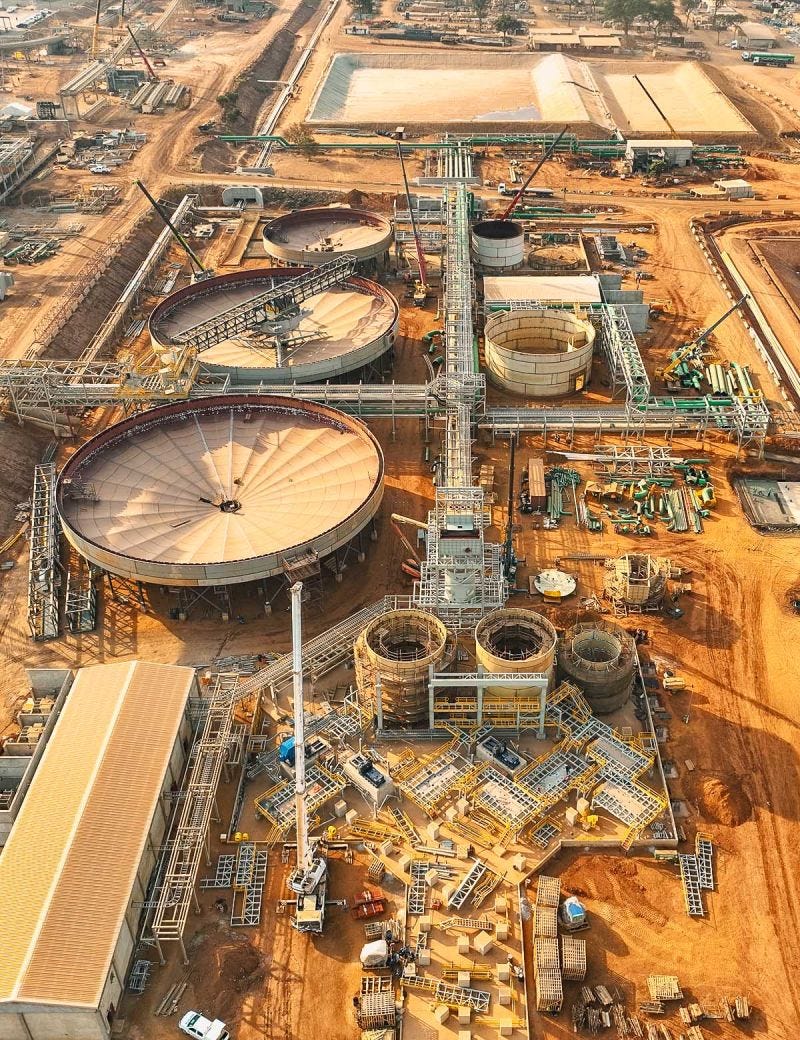
In August 2025, FQM completed the US$1.25bn S3 expansion, opened by President Hakainde Hichilema. Its 50MW combined SAG and ball mill is among Metso’s largest installations at a single site. The expansion nearly doubled processing capacity from 28Mtpa to 53Mtpa and shifted Kansanshi from selective high-grade ore to bulk sulphide processing at depth. Its smelter, expanded alongside S3, will produce over 400,000t of copper anode annually; FQM reports more than 1,500 local suppliers across its Zambian operations.
In Q1 2026, Kansanshi produced 45,345t of copper, with the new circuit running above design capacity according to company investor materials. Full-year guidance is 175,000-205,000t. FQM reports more than 13,000 people employed at Kansanshi; FQM’s 2025 reporting puts the year’s wage bill at US$390m, up 65% on 2024.
The pit is now around 220m deep; ultimate design depth estimates range from 400-500m, depending on the technical source.
Sixteen centuries after this hill was first worked by hand, Kansanshi is still going deeper, toward a pit that will approach half a kilometre below where that story began.