


Originally published on LinkedIn. This work is AI-assisted - read about how I work.
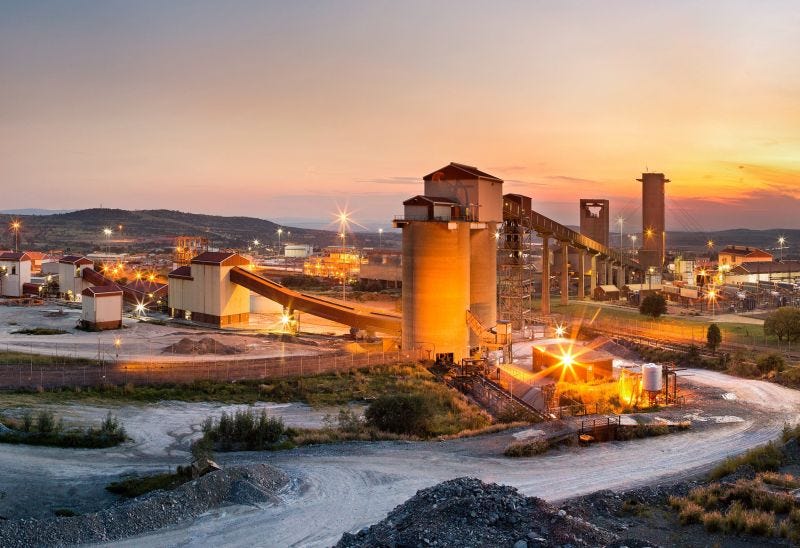
The deepest mine on earth runs nearly 4 km straight down, under a farming town west of Johannesburg. Getting to the working face takes nearly an hour. At that depth, almost everything about mining becomes harder.
Mponeng was also the last South African gold mine held by the lineage that defined the industry. Anglo American was founded on the Rand in 1917. Its gold became AngloGold, then AngloGold Ashanti. When Mponeng was sold to Harmony Gold Mining Company Limited in 2020, that lineage no longer mined an ounce of gold in the country where it began.
But the ground was lived in from below long before any shaft. In the Lepalong caves outside Carletonville, the BaKwena, led by kgosi Maselwane, built an underground village, sheltering from Mzilikazi's raids between 1827 and 1836, beneath ground later mined 4 km down.
The Witwatersrand reefs tilt down into the basin, and the richest have been chased down-dip for a century, further from surface each decade. Western Deep Levels began sinking in 1981 and poured first gold in 1986. The reef it chases is about 2.7 billion years old.
Mponeng's recovered grade in 2025 was 11.27 g/t, eight times the global average. The cost is depth. The rock at the bottom sits well above sixty degrees Celsius, and about 6,000t of ice a day is pumped down the shafts to keep the work survivable. Seismic events are recorded underground every day. The ice is the price of standing where the gold is.
Around 6,000 people work the mine. Carletonville exists because of mining. Khutsong next door depends on the shafts, and sits on dolomite that decades of dewatering have turned treacherous, with 3,187 households under sinkhole threat. The deepest question at Mponeng is not in the rock. It is whether the community built on the mine outlives it.
The ownership runs the length of South African gold. Anglo American folded its gold interests into AngloGold in 1998, which became AngloGold Ashanti in 2004. Through the 2010s, AngloGold Ashanti sold down its South African portfolio, including the Vaal River operations to Harmony in 2017 and 2018. Mponeng, the deepest and the last, followed in 2020, sold for about R4.4bn against a book value of about R9.9bn for the package.
Then Harmony did what the previous owner would not. In 2024 it committed R7.9bn to carry Mponeng to around 2044, nearly two more decades for a mine that had been given seven, adding 3.05 million ounces to reserves.
In Carletonville that is not counted in ounces. It is counted in wages, in school fees, and in another generation of work in a town that has watched the shafts around it close. Harmony did not simply buy the last mine of an old South African gold lineage. It gave the deepest mine on earth another life.