


Originally published on LinkedIn. This work is AI-assisted - read about how I work.
Tshipi é Ntle is Setswana for "beautiful steel." Manganese hardens and refines steel — without it, the metal is brittle and unworkable. The name encodes what the ore does before the mine existed.
The name arrived before the mine. In 2003, nine Black South African investor groups formed Ntsimbintle Holdings. The following year, once the Mineral and Petroleum Resources Development Act came into force, they applied for prospecting rights on ground between Kathu and Hotazel that the established operators hadn't claimed. Without the Act, the application was legally impossible.
It took eight years to get to first ore.
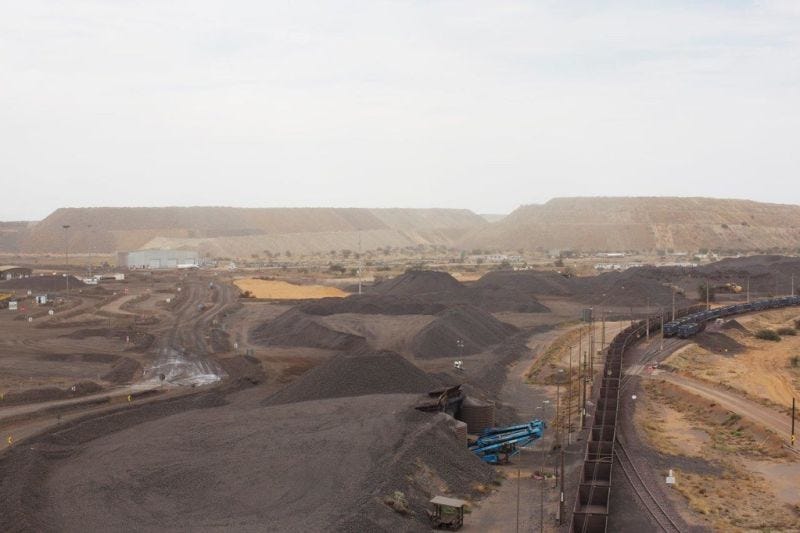
The ground is in the Kalahari. Dry, flat, enormous. The Northern Cape sun on pale calcrete and red sand, far from any city, in a field that holds more than 75% of the world's manganese resource. Two operators had worked it for decades. Ntsimbintle applied for the ground they'd left between them. Semi-carbonate ore, medium grade. Not the deepest seam in the basin. Not the richest. But unmined, and now legally available, and theirs if they could hold it together long enough to build a mine.
In November 2010, The Pallinghurst Group, acting through Jupiter Mines, acquired 49.9% for A$245 million. Jupiter raised a further A$150 million the following January. The capital arrived from Australia. The mine became real.
Tshipi Borwa was commissioned in 2012. Year one: 1 million tonnes. Year two: 2 million tonnes. By 2018 it was South Africa's largest single-mine manganese exporter.
At the 2011 sod-turning, Saki Macozoma — former political prisoner, anti-apartheid activist and BEE investor — said words to the effect that "Only a few years ago it would have been impossible for a Black group like ours to have created this."
He wasn't being rhetorical. The MPRDA had existed for eight years. Ntsimbintle had spent every one of them building toward that moment. What Macozoma named as impossible wasn't the geology or the capital. It was the legal right to try.
The mine paid. Across 2017 alone, Tshipi distributed R1.5 billion to its shareholders, Ntsimbintle and Jupiter alike. FY2025 production reached 3.6 million tonnes, a record. Mine life in excess of 100 years on the resource base. In September 2025, Tshipi signed a ten-year rail capacity agreement with Transnet, securing the corridor to port.
Then, on 13 May 2025, Exxaro Resources announced it would acquire the Ntsimbintle and OM Holdings stakes for R11.67 billion. The transaction closed 27 February 2026. R10.6 billion cash. Exxaro, itself a BEE vehicle created by the earlier Kumba Resources unbundling, now holds an effective 60.1% of the mine economics. Jupiter retains 49.9%, with both parties now exercising joint control.
The mine Macozoma celebrated as a breakthrough is now owned by a company that was itself made possible by the same policy logic.
That is the system working.