


Originally published on LinkedIn. This work is AI-assisted - read about how I work.
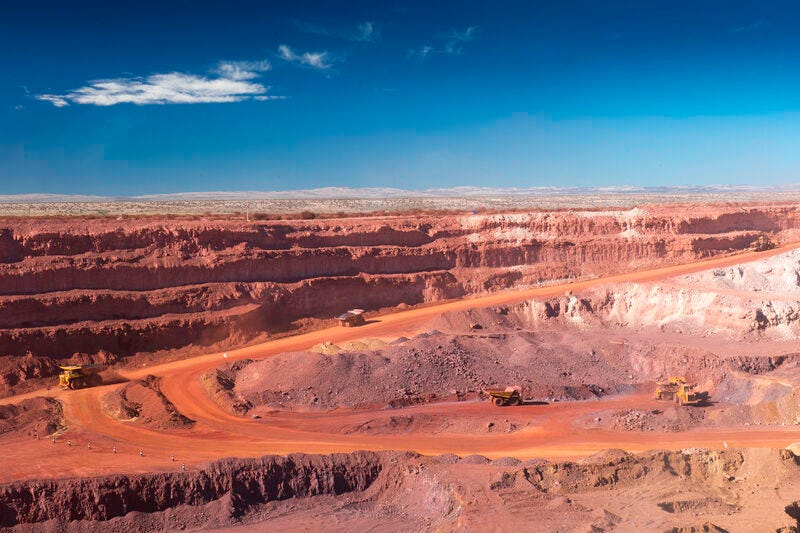
The Gamagara Ridge in the Northern Cape holds haematite 2.4 billion years old. The Griqua and the Korana knew this ground long before a steel corporation arrived to measure it. Four mines were built on it. Three draw from it now. Sishen is the one the world knows. These three run alongside it.
Assmang Beeshoek opened in 1964. Assmang built it, then jointly owned by Assore Group and Anglovaal, to supply a single customer, not the open market. Iscor bought the ore, converting Northern Cape rock into the steel that built South African cities. That arrangement held for 61 years. It ended in July 2025, when ArcelorMittal South Africa stopped buying. Not because Beeshoek’s ore had changed. Because the electricity needed to turn that ore into steel had become too expensive to justify. There was nowhere else for it to go.
In November 2025, Assmang Beeshoek, jointly owned by African Rainbow Minerals Limited and Assore, placed the mine on care-and-maintenance. Six hundred and twenty-two workers were retrenched by month’s end. A community built around one mine across six decades absorbed the news. The NUM called it a body blow to Postmasburg.
ArcelorMittal lost R5.1 billion in 2024. Eskom tariffs had outpaced inflation for years. Cheap imported steel filled the gap the domestic industry could no longer defend. The long-steel plants at Newcastle and Vereeniging closed in late 2025. South Africa’s steel output is now roughly half what the country produced in the early 2000s. The ore still travels 861 km to Saldanha Bay on the railway Iscor built in 1974. The furnaces it was built to serve are dark.
Assmang Khumani was engineered for 14 million tonnes a year. It produces around 12. Not because the deposit is shallow. Because the Ore Export Channel runs at roughly half its design capacity. Multiple derailments disrupted the line in 2024 alone. Khumani’s 14 million tonne capacity is intact; the constraint is the railway, not the mine. South Africa opened the line to private operators in April 2025. The upside is defined.
Kolomela Mine, owned by Kumba Iron Ore under Anglo American, produced 10 million tonnes last year and is building forward. In early 2026, Kumba declared Heuningkranz: a substantial new resource adjacent to the current mine, grading higher than ore already being shipped.
The miraculous Maremane dome has not run out. South Africa’s iron ore belt is world-class by any measure. It is not exhausted. It is unserved.
Beeshoek was built for furnaces that electricity prices made unaffordable. Khumani and Kolomela were built for a railway moving ore below the pace the belt warrants.
Two infrastructure challenges, pulling in opposite directions, on the same geology.
Against that backdrop, Kolomela has declared a new resource and is investing forward. That kind of confidence, on this belt, at this moment, is worth something.