


Originally published on LinkedIn. This work is AI-assisted - read about how I work.
In November 2024, 800 workers — 80% of Trojan’s workforce — were retrenched. The same week, global EV manufacturers were deploying more nickel into battery cells than at any point in the preceding decade.
The Mazowe Valley sits 88 km northeast of Harare. This is Korekore territory — Northern Shona people whose small, mutually independent chiefdoms predated the colonial mining map that named this ground “Trojan.”
The komatiite-hosted sulphides underneath it were not part of any arrangement the Korekore made.
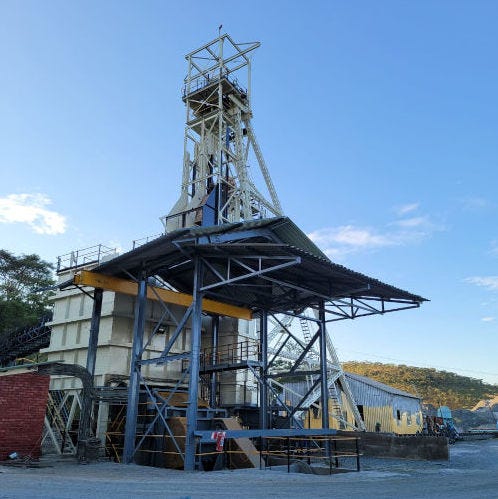
Bindura Nickel Corporation began production here in 1964. Anglo American built the smelter four years later — the only fully integrated nickel operation on the African continent. Mine, concentrator, smelter, refinery: one chain.
Anglo left in 2003, selling its 52.9% stake for US$8 million as nickel sat at US$9,000 per tonne and Zimbabwe’s political risk made the asset difficult to hold. At peak, in 2015, Trojan produced 7,306 tonnes of nickel concentrate. The town of Bindura grew around it.
The integration broke before the mine did. In early 2009, BNC mothballed the smelter.
From that point, concentrate moved overland to Durban — 1,800 km southeast — for others to process. A refurbishment project began years later, reached 83% completion by 2017, then stalled for want of capital. The smelter has been silent ever since.
The ore is unusual. Massive sulphides with grades reaching 10% nickel — rare globally — blended with disseminated ore at 0.86% cutoff. A mine that could adapt its product mix to price cycles in ways most operations cannot.
What finally closed the mine was not the geology. Nickel hit US$100,000 per tonne in March 2022. By the time BNC’s ore-hoisting winder failed eighteen months later, the price had fallen more than 80%. Indonesia’s laterite flood — now more than 60% of global supply — had repriced the market. Power tariffs for Zimbabwean miners rose 40–60% in the sixteen months before closure. By May 2024, BNC was under administration.
The mine sits idle with a proved reserve of 23,600 tonnes of contained nickel. The smelter holds a slag dump carrying 7,309 tonnes of nickel, 2,924 tonnes of copper, and 6,139 tonnes of cobalt — a secondary resource stranded beside a furnace that cannot process it. Zimbabwe’s February 2026 raw mineral export ban requires domestic beneficiation on restart. The smelter must be completed first. The state-owned Mutapa Investment Fund, which controls BNC through Kuvimba Mining House, has set a US$950 million capital-raising target for its mining portfolio.
Extraction cost runs at approximately US$17,000 per tonne against an LME price, in early April 2026, of approximately US$17,100.
The shaft, the concentrator, the smelter, the refinery — the full chain, intact, waiting on the Zimbabwean highveld.