


Originally published on LinkedIn. This work is AI-assisted - read about how I work.
Botswana closed the mine on a Friday. By Monday, more than 4,000 BCL workers had no mine to return to. The town had no other anchor employer. That is where this story begins — not with geology, not with commodity prices, but with a single decision and the silence that spread across a town built on the assumption that the mine would always be there.
The Bangwato people had held this ground for centuries — their kgosi travelled to London in 1895 to keep it from the concession companies. When BCL arrived, it was not the first claim on this land.
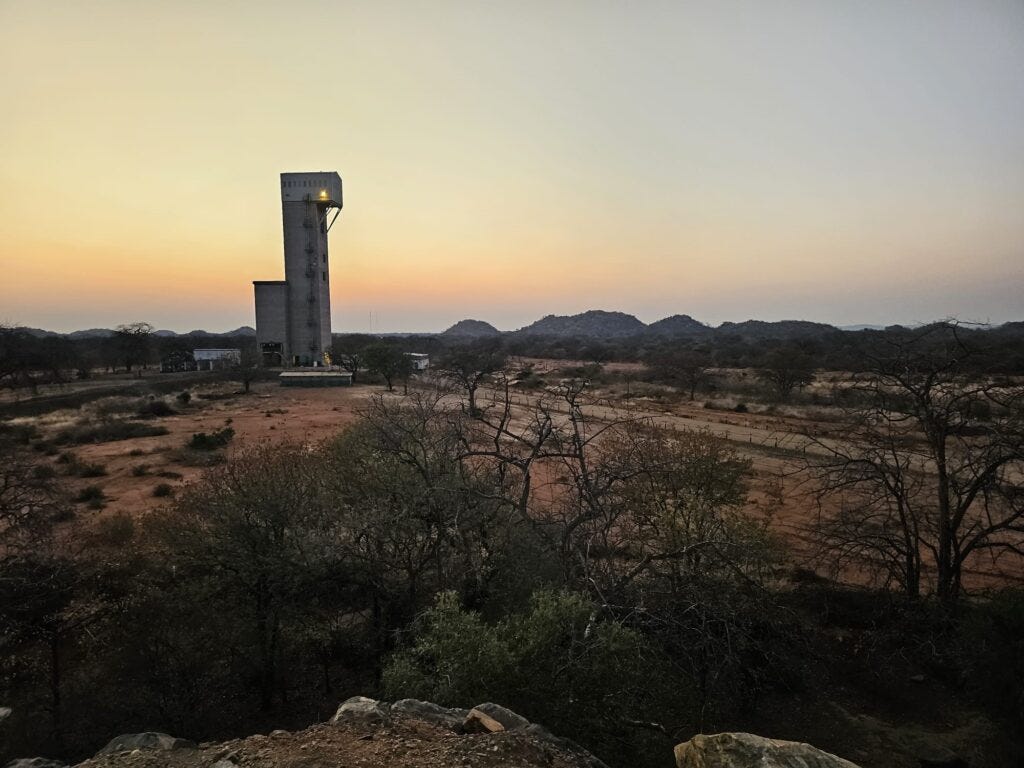
Selebi-Phikwe was built to house the workers of Bamangwato Concessions Limited — BCL.
The same two houses that established the Zambian Copperbelt — Anglo American and Roan Selection Trust — both found their way into BCL’s ownership: RST from 1959, Anglo American in 1970. Selebi-Phikwe was a southward extension of the same Copperbelt capital. BCL became fully state-owned over the following decades — Botswana’s second-largest mining company after the diamond mines, paying taxes that funded schools and clinics. The town existed because the mine existed. There was no separation.
In October 2016, the Botswana government placed BCL into liquidation. Prices had collapsed. A private operator can put a mine on care and maintenance and wait for commodity prices to recover. A government cannot easily do the same when the mine is the town, the tax base, and a symbol of national economic policy.
The decision did not account for what BCL’s own geologists had never fully mapped: the true scale of what remained underground.
Over 4,000 direct employees were retrenched. Tax revenues, school funding, and retail trade contracted in a single stroke. Community leaders were still describing the town as unrecovered eight years later. Population fell. Shops closed. The infrastructure built for a working mine served a community with no mine to work.
The ore didn’t leave with the workers.
New drilling found the resource at Selebi Main is 67% larger than BCL believed when it closed. An additional domain below the historical workings had never been properly characterised. The rock was always there. The knowledge of its full extent was not.
Nickel sulphide — the specific form of mineralisation at Selebi-Phikwe — is now the preferred feedstock for battery-grade nickel sulphate, the material that goes into EV battery cathodes. The ore BCL spent five decades mining for stainless steel is now, in the same physical form, a battery material.
NexMetals Mining holds the licences, declared a 27.7 million tonne NI 43-101 resource in August 2024, raised C$80 million in November 2025, and completed a US$25 million payment to the BCL liquidator in December to secure unencumbered title. The shafts are being assessed for re-entry.
The town is waiting.