


Originally published on LinkedIn. This work is AI-assisted - read about how I work.
In 2013, GOLD FIELDS handed its South African gold to someone else. Kloof, Driefontein, Beatrix: unbundled into Sibanye-Stillwater. International assets, mechanised operations, growth profile. That was the direction. It kept one SA mine.
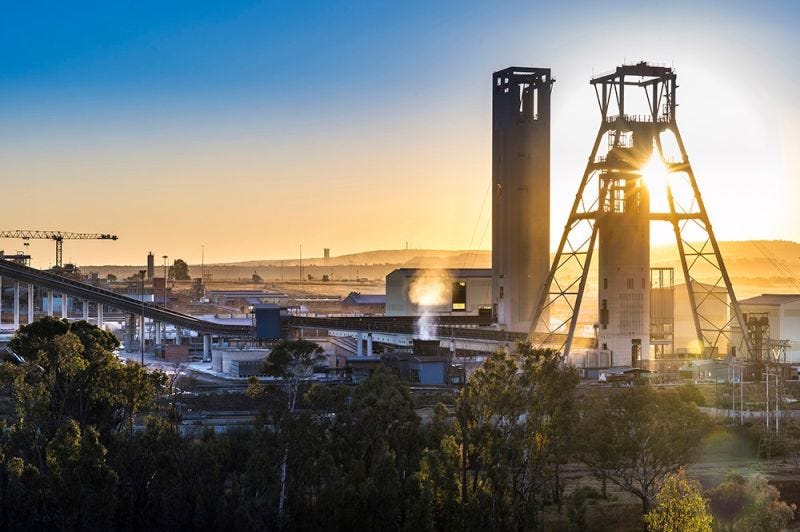
South Deep sits near Westonaria, 45km south-west of Johannesburg. BaFokeng and BaKwena Sotho-Tswana people built stonewalled settlements here from at least the 15th century. Mzilikazi's forces depopulated the region in 1823. The Voortrekkers found land that looked empty. It was not. The workers named South Deep's solar plant Khanyisa. In Setswana: Light Up. The prior claim travels in the language.
Gold Fields was founded in 1887 by Cecil Rhodes and Charles Rudd. Johannesburg Consolidated Investments was founded two years later by Barney Barnato. Two of the oldest houses on the Witwatersrand. South Deep came through the JCI line: developed by Western Areas before Placer Dome of Canada took a 50% joint venture in 1999. Barrick acquired Placer Dome in 2006 and sold the stake within a year. Gold Fields paid US$1.525 billion for that 50% in 2006, then bought out Western Areas in 2007. Total: US$2.5 billion. Not a conventional mine.
The Upper Elsburg Massives reef runs up to 120 metres thick. Every other mine on the West Wits Line works reefs averaging less than two metres. The ore sits 2,800 to 3,300 metres down, by design. The seventh deepest mine in the world. At those depths, rock temperatures reach 50 degrees Celsius before refrigeration. The reserve stands at 28 million ounces. South Deep was built for machines. Gold Fields stopped conventional mining in 2008. It had always been the plan. It took twenty years to execute.
Transitioning from labour-intensive to mechanised mining was always going to be difficult. The machine version of South Deep needed fewer people, differently skilled. Targets were missed for nearly a decade. The 2017 Rebase Plan reset the programme. Westonaria is a town where mining accounts for 52% of economic activity.
The model eventually worked. Gold Fields posted 309,000 ounces in 2025, 16% higher year on year, and generated R9.1 billion in free cash flow. Khanyisa provides 24% of the mine's electricity and saves R123 million a year. The life of mine runs to 2101. South Deep is ramping up.
Every other South African asset Gold Fields held, it sold or unbundled. South Deep it kept. It invested in new ore reserves south of a major fault, in renewable power, in depth. That is not an exit position.
When Gold Fields walked away from the conventional Witwatersrand in 2013, it held on to one thing. The thing it had spent twenty years and US$2.5 billion believing it could finally make work.