


Originally published on LinkedIn. This work is AI-assisted - read about how I work.
Tharisa Mine sits on the farm Rooikoppies, 35 kilometres east of Rustenburg on the Western Limb of the Bushveld Complex. The country is flat, dry highveld. Red soil. Thornveld pressing against the fence lines. Open pits cut into the earth. In March 2026, the Apollo portal fired its inaugural underground blast. A junior miner had just extended its life by more than fifty years.
The family behind Tharisa has been in South African mining for decades — a Cypriot-born dynasty that came to the Bushveld three times. The first attempt, in the 1980s, was ended by a platinum price collapse. The second produced Eland Platinum, assembled from ground the majors had not developed and sold to Xstrata in 2007 for approximately US$1 billion. The third time was Tharisa. Founded 2008 on prospecting rights over the MG chromitite layers. Genesis Plant commissioned 2011. The balance sheet no longer reads like a junior’s.
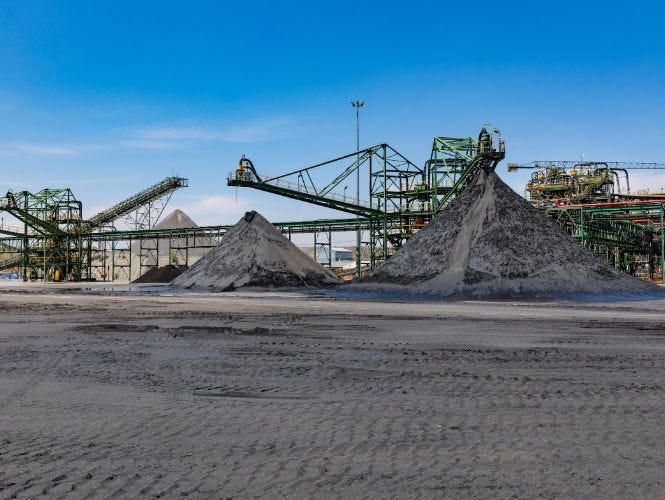
The reef selection was the insight. Tharisa mines the MG chromitite layers, not the UG2. In MG ore, PGMs sit in silicates, physically separate from the chromite. Spirals pull the chrome out first. Flotation recovers the PGMs from what’s left. No furnace required. Someone else carries the smelting cost. Someone else carries the electricity risk. The Vulcan plant, developed in-house, was the first in the world to recover chrome from ultra-fines at scale.
When Eskom tariffs hit R1.36 per kilowatt-hour against a ferrochrome viability threshold of 62 cents, integrated smelters curtailed output or went to care and maintenance. Tharisa had no smelter to switch off. FY2024: 1.7 million tonnes of chrome concentrate, a record. Revenue: US$721 million. Roughly two-thirds from chrome, one-third from PGMs.
Fujian Wuhang, a Chinese stainless steel producer, was among the investors who put US$95 million into Tharisa in 2011. The customer became a shareholder. The founding family holds a significant controlling stake. The Tharisa Community Trust was established the same year, originally holding 6% equity in the operating company; that stake was restructured in 2022 as part of a broader BEE transaction. Approximately one-third of the workforce is drawn from host communities.
The $547 million underground transition adds more than fifty years beyond the open pits.
Tharisa holds an effective 68% interest in Karo Platinum, in Zimbabwe, 80 kilometres south-west of Harare. That operation targets first ore in 2027.
The majors worked the UG2 for platinum and sold chrome as a credit. Tharisa chose a different reef and built a mine around what that choice made possible.
Across Southern Africa, juniors are finding value in ground the majors priced, passed, and left. Tharisa is a clean example of what that looks like when the geology, processing, and patience align. Copper, gold, PGMs, chrome — the junior story across Southern Africa is one to watch.