


Originally published on LinkedIn. This work is AI-assisted - read about how I work.
Today is the last in a short mini-series on sectors that share their early history with Southern African mining. Previously, I wrote about the law firms and the banks that arrived with the ore. Today I wanted to write about beer. Mainly because I was fascinated to discover that until its delisting, The South African Breweries was the second-oldest listed company on the JSE. DRDGOLD Limited, listed since 1895, is now unambiguously the oldest.
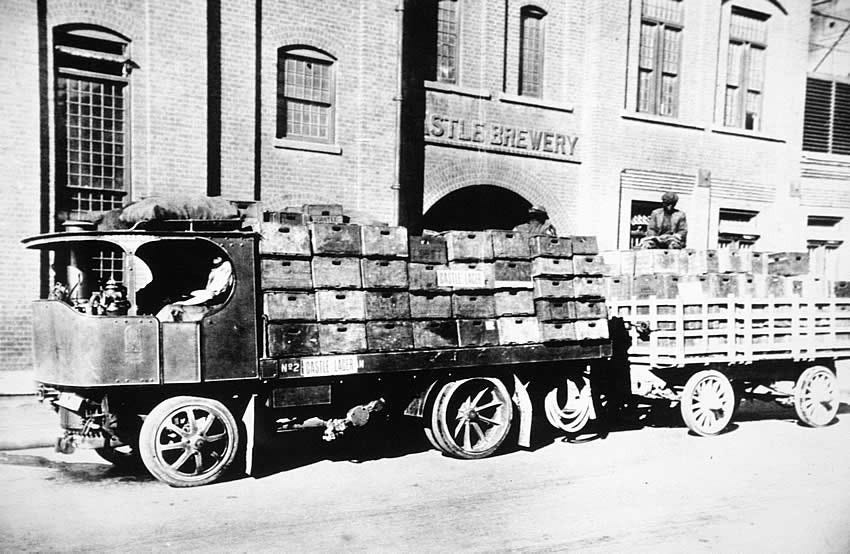
Charles Glass is a name many will remember. Many may have assumed it was invented. It was not. Glass was an English brewer who had supplied beer to British troops in India, who arrived in Johannesburg after the gold rush to brew. He saw what the reef had made: young men working hard shifts underground, with wages and nowhere “respectable” to spend them. There is an intriguing account by a UCT academic suggesting that Castle was actually the invention of Glass’ spouse, Lisa. Her history seems forgotten and really should not be.
By 1889, contemporary accounts in the Digger’s News were already describing his Castle Lager as a phenomenal success. Glass had taken the mine’s workforce and turned it into a customer base. Marshall and Welsh, a township developer and a Barberton coach operator, brought the capital, and the brewery occupied several stands in Marshall’s Township on the edge of the gold fields.
In 1892, Glass sold. The buyer was Frederick Mead, backed by a consortium that included Barney Barnato and interests associated with JCI. Mining capital bought the brewery that had grown up at the mine’s gate.
SAB was registered in 1895 and became the JSE’s first industrial listing in 1897 - an outlier on a market built for mining companies.
The relationship between beer and mining was not only commercial. By the mid-1890s, the Chamber of Mines had reversed its earlier tolerance of alcohol on the Rand. Like almost all other aspects of life in South Africa, beer was also segregated. Legislation barred Black workers from buying or drinking most liquor on the Witwatersrand. The exception was sorghum beer, which mine companies brewed inside closed compounds and sold back to the workforce at a profit.
Two beer economies. One for the white market, one Black market managed inside the compound fence.
In 2016, Anheuser-Busch InBev acquired SAB in a transaction valued at around 104 billion US dollars, and the company was delisted from the JSE.
My favorite bit of heritage, the bar counter of the Ferreirastown Hotel was later relocated to the Radium Beer Hall in Orange Grove when the old gold-rush building came down. Online accounts record that trade unionist Mary Fitzgerald is believed to have stood on that counter to address striking miners in the early twentieth century. The counter is said still to be there. I last saw it there myself 26 years ago.
A bar counter from a mine camp. Still in use.